Steel vs timber
Timber pod makers market against metal. Here’s the honest version.
You’ll hear two objections to a steel cabin: cold bridging and rain noise. Both are fair questions — about the wrong construction. Below is the comparison we’d want to see if we were buying: what each material costs you over fifteen years, not on day one. We’ve left in the row timber wins.
Over a 15-year life
Total cost of ownership, not sticker priceYes, timber gets the last row. A pine interior is why people love timber pods — so that’s exactly what we line ours with. Steel where the weather is, natural pine where you sleep.
The objections, head-on
“Steel is cold.” “Rain on a tin roof.” Both deserve a straight answer.
Cold bridging
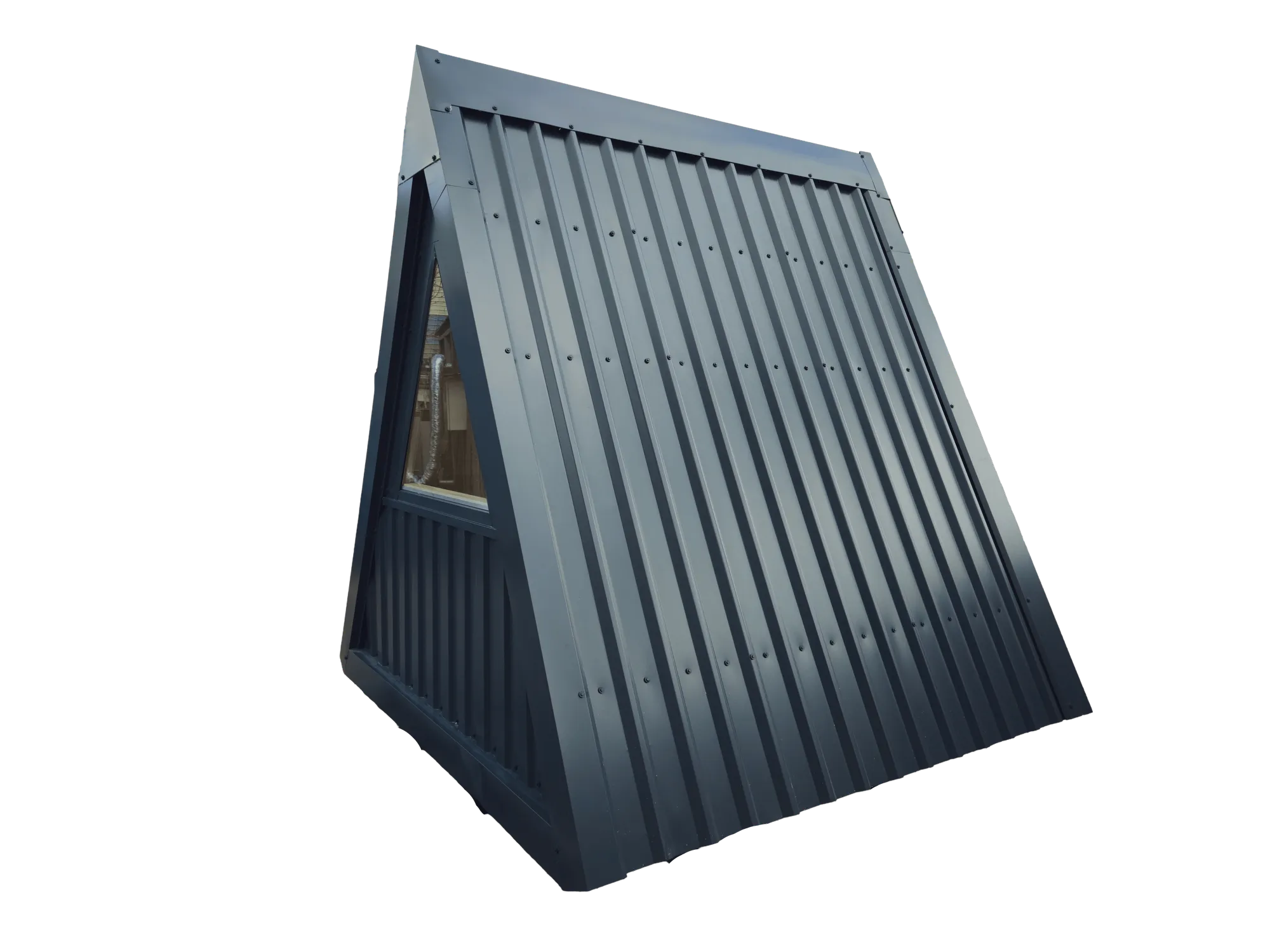
The worry is real for single-skin steel buildings — sheds, shipping containers — where the metal is all there is. These cabins are built differently: the walls and roof are 80 mm PIR composite panels, a rigid insulating core bonded between two coated steel faces. The steel is the skin; the PIR core is the insulation. It’s the same composite panel construction our factory supplies to the UK building trade, where keeping heat in — or out — is the whole job.
Noise in the rain
Rain drumming on a bare tin roof is loud because a thin single sheet acts like a drum skin. An insulated composite roof doesn’t: the rigid PIR core is bonded to the steel and damps it, and the pine-lined interior adds another layer between you and the weather. This is insulated composite construction, not a tin shed — and it sounds like it.
For site owners
Running multiple units? Multiply the maintenance too.
One timber pod that needs treating every two to three years is a chore. A row of them is a maintenance programme: every cycle means labour booked, access kit on site, and units out of service — usually in the months you’d rather be taking bookings. Whatever a treatment cycle costs you per pod, the real number is that figure times your unit count, times every cycle across the life of the site.
Steel removes that line from the spreadsheet. No re-staining, no rot inspections, no swollen doors after a wet winter. The powder-coated shell that arrives is the shell you have in year fifteen. So compare the way commercial buyers compare: sticker price plus fifteen years of upkeep, across every unit — not sticker price alone.
See what a steel cabin looks like — then price both routes.
Tell us your site and unit count and a real person from the factory replies the same day, with numbers.